Buying commercial property in Singapore as an Indian: shops, offices and the rules
Singapore is the one market we cover for commercial property only. Foreign buyers pay a 60% Additional Buyer’s Stamp Duty on homes, but that duty applies to residential property only. Shops, offices and other commercial property can be bought by foreigners without approval, and carry buyer’s stamp duty of up to 5% plus, from a GST-registered seller, 9% GST.
Emaan Global Properties · Published
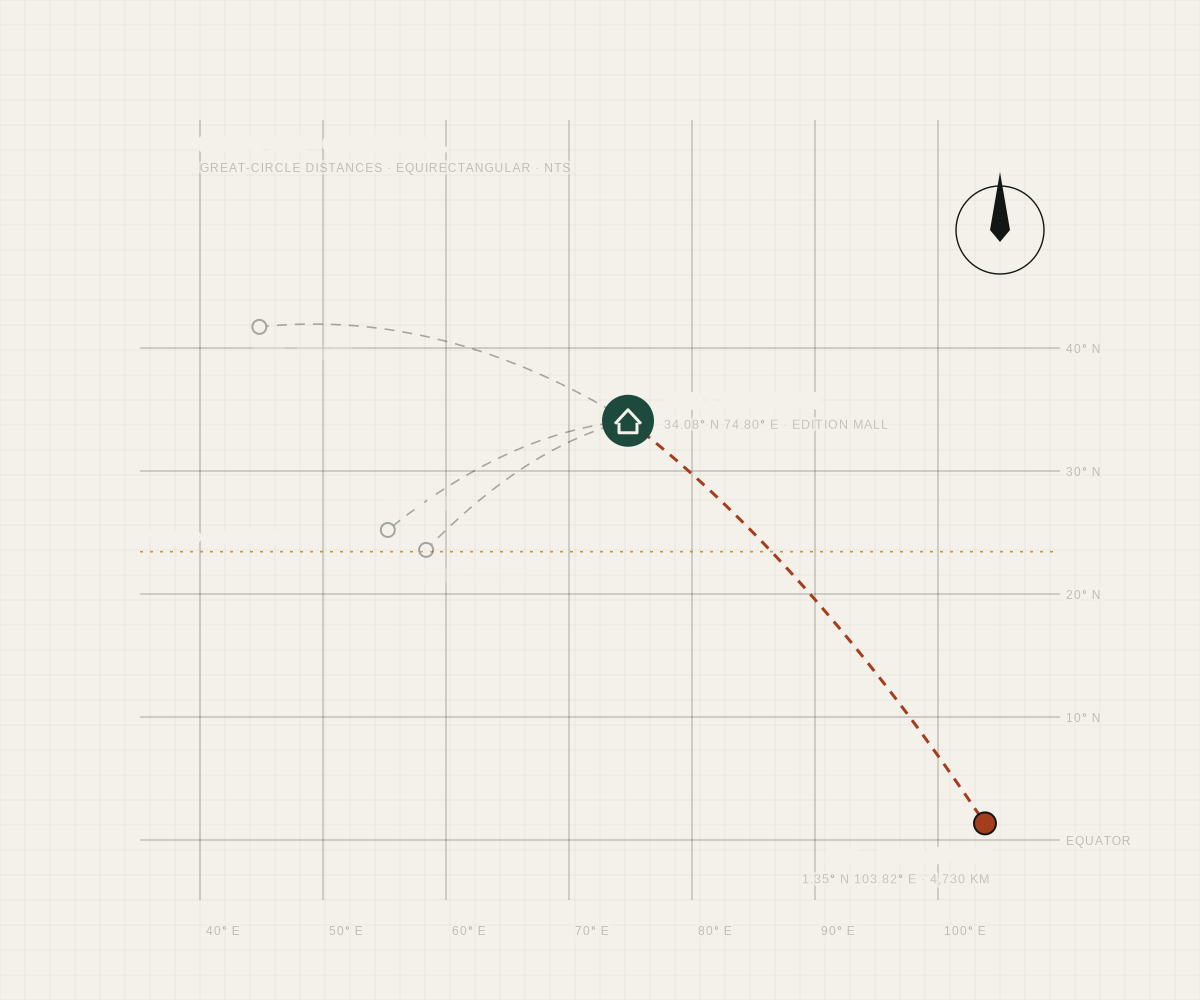 Illustration
- ABSD on homes, foreigners
- 60%
- Since 27 Apr 2023 — residential only (IRAS)
- Stamp duty, commercial
- 1–5%
- Tiered buyer’s stamp duty, from 15 Feb 2023 (IRAS)
- GST
- 9%
- When the seller is GST-registered (IRAS)
- Property tax
- 10%
- Of annual value, non-residential (IRAS)
Why do you cover only commercial property in Singapore?
Because of stamp duty. A foreigner buying a home in Singapore pays Additional Buyer’s Stamp Duty of 60% of the price, on top of the normal buyer’s stamp duty. Singapore’s Ministry of Finance applies ABSD to residential property only, so commercial property is the part of the market where an Indian buyer starts on a level footing.
Read the full answer
IRAS raised ABSD for foreign buyers of residential property from 30% to 60% for purchases on or after 27 April 2023. A home bought for S$1 million would carry S$600,000 in ABSD alone — which is why we leave Singapore homes out entirely.
Two things to watch:
- A residential part counts as residential. For a unit, IRAS looks at its permitted use, and any part permitted for residential use is residential. A shophouse with homes permitted upstairs attracts ABSD on that part.
- Land zoning matters for whole buildings. For land or a whole building, IRAS looks at Master Plan zoning: land zoned Commercial is treated as entirely non-residential, while land zoned Commercial & Residential is split, for buyer’s stamp duty, 60% residential and 40% non-residential.
What commercial property can a foreigner buy in Singapore?
The Singapore Land Authority lists industrial and commercial properties, and shophouses for commercial use, among the property types a foreign person can buy without approval. Approval is needed for shophouses used for non-commercial purposes and for Commercial & Residential properties, which were brought under the Residential Property Act in July 2023.
Read the full answer
In practice:
- Offices, shops and strata commercial units — open to foreign buyers without approval.
- Shophouses — without approval only if they are for commercial use. A shophouse whose permanent approved use includes residential is a restricted residential property, and needs approval.
- Mixed developments — since 20 July 2023, Commercial & Residential property counts as residential under the Residential Property Act, but a strata unit in a non-landed mixed development is generally not subject to approval.
- Industrial units — open to foreigners, but on B1 industrial land at least 60% of each unit’s floor area must be used for industrial purposes; offices and other ancillary uses may take no more than 40%. Units on JTC land can carry their own lease conditions, which your lawyer should check.
The approved use of the specific property decides the answer, so it is the first thing a Singapore lawyer checks.
What does it cost to buy commercial property in Singapore?
Buyer’s stamp duty on non-residential property is tiered from 1% to 5%, charged on the higher of the price and the market value, and due within 14 days. If the seller is registered for GST, 9% GST is added. There is no Additional Buyer’s Stamp Duty on a purely commercial property. Lawyer’s and agent’s fees come on top.
Read the full answer
Buyer’s stamp duty, non-residential (rates from 15 February 2023)
| Portion of the price or value | Rate |
|---|---|
| First S$180,000 | 1% |
| Next S$180,000 | 2% |
| Next S$640,000 | 3% |
| Next S$500,000 | 4% |
| Above S$1.5 million | 5% |
Worked example, using those rates: on a S$1,500,000 shop unit, stamp duty is S$1,800 + S$3,600 + S$19,200 + S$20,000 = S$44,600, about 3% of the price.
GST
- Singapore’s GST rate is 9%. A GST-registered seller must charge it on the sale of non-residential property; homes are exempt.
- If the contract doesn’t say GST is added on top, the price is treated as including GST — so ask before you agree a number.
- A GST-registered buyer using the property for a taxable business can claim the GST back. An individual buyer from India usually can’t, so treat it as a cost: S$135,000 on the S$1.5 million example.
- On a shophouse with a residential floor, GST applies only to the non-residential part, split by independent valuation.
Is there a tax when you sell?
IRAS lists seller’s stamp duty for residential and industrial property only. Industrial property bought since 12 January 2013 carries seller’s stamp duty of 15% if sold within one year, 10% within two years and 5% within three, and nothing after that. IRAS does not list a seller’s stamp duty for commercial property.
Read the full answer
For an Indian resident, any gain on sale is also reportable in India, with credit for tax paid abroad where the tax treaty allows it. A chartered accountant who handles foreign assets should look at this before you buy, not after you sell.
What does it cost to own and rent out a Singapore commercial property?
Non-residential property pays property tax at 10% of its annual value each year. Rent earned by a non-resident individual is taxed in Singapore at 24% from Year of Assessment 2024. Under the India–Singapore tax treaty, Singapore may tax that rent and India gives a credit for the Singapore tax, capped at the Indian tax on it.
Read the full answer
- Property tax: 10% of annual value — IRAS’s estimate of the yearly rent the property could fetch — for commercial and industrial property.
- Income tax on rent: 24% for non-resident individuals (22% before Year of Assessment 2024), after allowable expenses.
- India: a resident Indian reports the property in Schedule FA every year and the rent in their return, claiming credit for Singapore tax under Article 25 of the treaty.
- Gulf-based NRIs: the India–Singapore treaty applies only to residents of India or Singapore. If you are tax-resident in the UAE or elsewhere, ask a tax adviser how your country’s rules apply.
Who can act for you in a Singapore purchase?
In Singapore, estate agency work — including introducing a buyer to a seller or another party and negotiating for them — must be done by an estate agent licensed by the Council for Estate Agencies, which requires a Singapore-registered entity. We are not one, so we explain the rules and you engage a licensed agent directly.
Read the full answer
- Check the agent on CEA’s public register before you share documents or pay anything. Acting as an estate agent without a licence is an offence in Singapore.
- Agree the agent’s terms in writing. CEA’s prescribed agreement forms are for residential deals; commercial and industrial deals are exempt from that requirement, so the fee, who the agent acts for and what they will do should be written down yourself.
- Use a Singapore conveyancing lawyer to check the approved use, the title and any lease conditions, and to handle registration.
We don’t take referral fees for Singapore. Our part is the consultation: whether Singapore commercial property fits your budget and reasons, the costs above in rupees, and the Indian remittance and tax rules.
How does a commercial purchase work in Singapore?
Usually through an Option to Purchase: you pay an option fee, often 1% of the price, for the right to buy within a set period, then exercise the option and pay a further sum. Your lawyer checks the title and lodges a caveat, stamp duty is paid within 14 days, and ownership passes only on registration with the Singapore Land Authority.
Read the full answer
- Option to Purchase. Drafted by the seller’s lawyers. The option fee and the exercise amount are market practice, not law — commercial deals vary.
- Exercise and caveat. Once you exercise the option, your lawyer lodges a caveat with the Singapore Land Authority to protect your interest.
- Stamp duty. Buyer’s stamp duty on the accepted option or the sale agreement is due within 14 days.
- Completion and registration. Registration with the SLA Land Titles Registry is what transfers ownership.
Paying for it
- From India: a resident Indian remits from their own funds under the Liberalised Remittance Scheme — USD 250,000 per person per financial year — and cannot use an Indian bank loan for it. Compare the price with the LRS room your family actually has. See property abroad.
- Singapore loans: banks apply the Monetary Authority of Singapore’s Total Debt Servicing Ratio — repayments of all debts capped at 55% of monthly income — testing non-residential loans at an interest rate of at least 5%. Whether a resident Indian may take a foreign loan for this is a foreign-exchange question for your authorised dealer bank.
Questions people ask
Can a foreigner buy a shophouse in Singapore?
Yes, without approval, if it is a shophouse for commercial use. If its permanent approved use includes residential, it is a restricted residential property that needs approval, and the residential part attracts ABSD. A Singapore lawyer should check the approved use first.
Do foreigners pay ABSD on commercial property in Singapore?
ABSD is applied to residential property only, so a purely commercial property does not attract it. Any part of a property permitted for residential use is treated as residential, and that part can.
Will you help with a home or condominium in Singapore?
No. With 60% ABSD on homes for foreign buyers, we do not cover Singapore residential property at all — only commercial.
Can you introduce me to a Singapore agent?
In Singapore, introducing a buyer is itself estate agency work that needs a CEA licence. We explain the rules and costs; you choose and engage a CEA-licensed agent yourself, after checking them on CEA’s public register.
Sources
- [1]IRAS — Additional Buyer’s Stamp Duty (ABSD) — checked 10 Nov 2026
- [2]Ministry of Finance, Singapore — Stamp duty — checked 10 Nov 2026
- [3]IRAS — Definition of residential property — checked 10 Nov 2026
- [4]IRAS — Buyer’s Stamp Duty (BSD) — checked 10 Nov 2026
- [5]Singapore Land Authority — Foreign ownership of property — checked 10 Nov 2026
- [6]SLA / MinLaw — Q&As, Residential Property (Amendment) Notification 2023 — checked 10 Nov 2026
- [7]URA — B1 industrial use quantum — checked 10 Nov 2026
- [8]IRAS — Seller’s Stamp Duty for industrial property — checked 10 Nov 2026
- [9]IRAS — Learning the basics of stamp duty for property — checked 10 Nov 2026
- [10]IRAS — Current GST rates — checked 10 Nov 2026
- [11]IRAS — e-Tax Guide: GST guide for property owners (Aug 2026) — checked 10 Nov 2026
- [12]IRAS — Property tax rates — checked 10 Nov 2026
- [13]IRAS — Individual income tax rates (non-residents) — checked 10 Nov 2026
- [14]IRAS — India–Singapore DTA, consolidated with MLI — checked 10 Nov 2026
- [15]Council for Estate Agencies — Check if your property agent is registered — checked 10 Nov 2026
- [16]Council for Estate Agencies — Apply for an estate agent licence — checked 10 Nov 2026
- [17]Estate Agents (Estate Agency Work) Regulations 2010, as of 1 Jan 2026 (CEA) — checked 10 Nov 2026
- [18]Council for Estate Agencies — Court prosecution (offences) — checked 10 Nov 2026
- [19]IRB Law LLP — Option to Purchase (Jan 2026) — checked 10 Nov 2026
- [20]Singapore Land Authority — Land Titles Registry — checked 10 Nov 2026
- [21]MAS — Calculating TDSR — checked 10 Nov 2026
- [22]MAS — TDSR thresholds — checked 10 Nov 2026
Read next
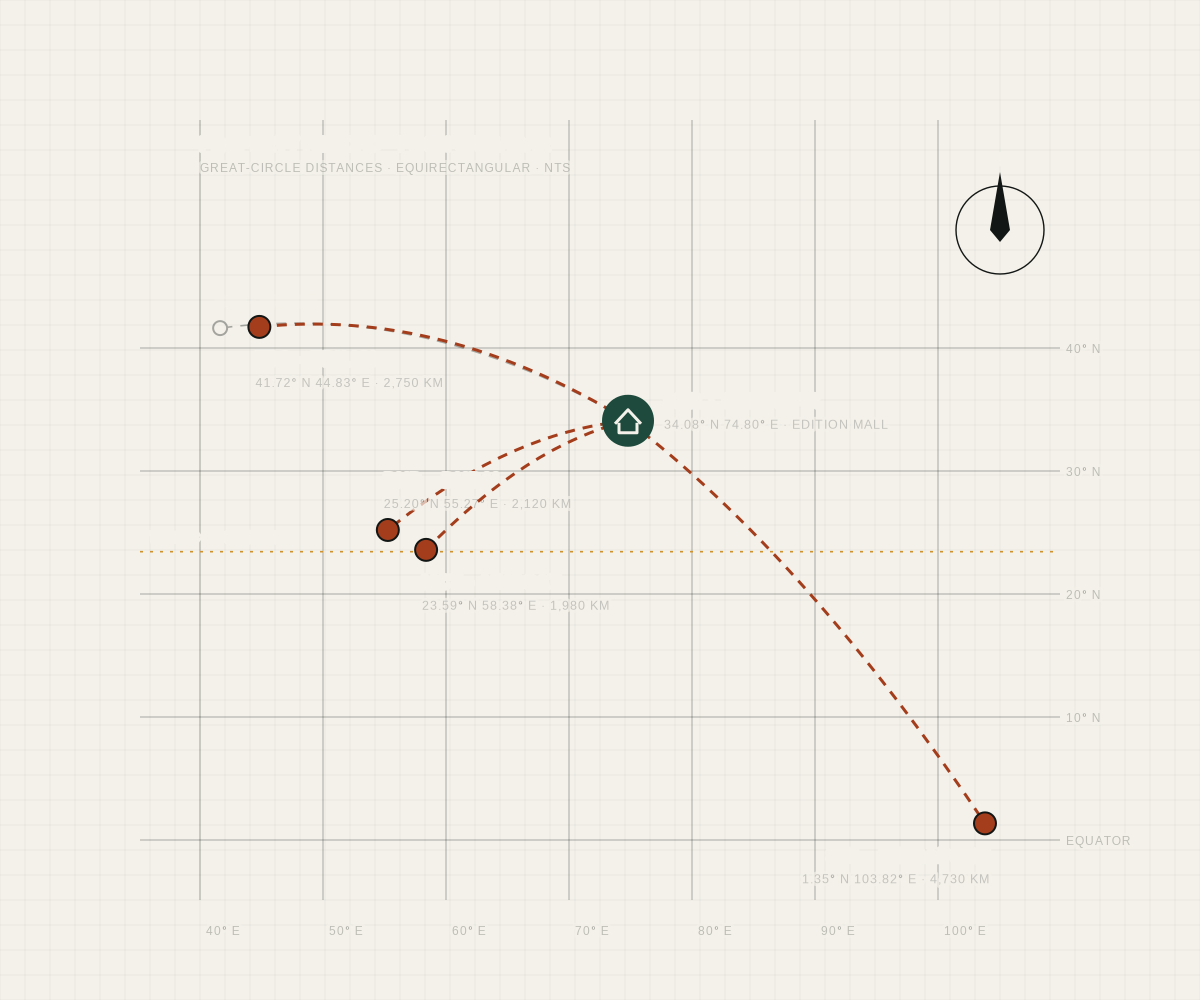 Illustration01Property abroadDubai, Oman, Georgia and Singapore (commercial) property for Indian buyers: what foreigners may buy, LRS remittance rules, costs in rupees and who can sell.
 Illustration02Dubai Property DeskDubai property explained for families in Kashmir and across India: how Indians can buy, off-plan risks, the Golden Visa — 1-on-1 at Edition Mall or by video.
 Illustration03Buying from IndiaStep by step: how an Indian resident or NRI can buy property in Dubai — the LRS limit, TCS, remittance, reporting, the Dubai purchase process and the costs.
Talk to us about property abroad.
A 1-on-1 consultation at Edition Mall or on video about Dubai, Oman, Georgia or commercial property in Singapore: costs in rupees, the remittance rules, and what to check before you pay anything.