Off-plan property in Dubai: how it works and what can go wrong
Buying off-plan means buying a flat or villa before it is built, usually with a deposit and staged payments, at a lower price than a finished home. Dubai protects off-plan buyers with escrow accounts and an interim title register called Oqood, but you still carry the risk of delays and of paying for something you have not seen.
Emaan Global Properties · Published
 Illustration
What is off-plan property?
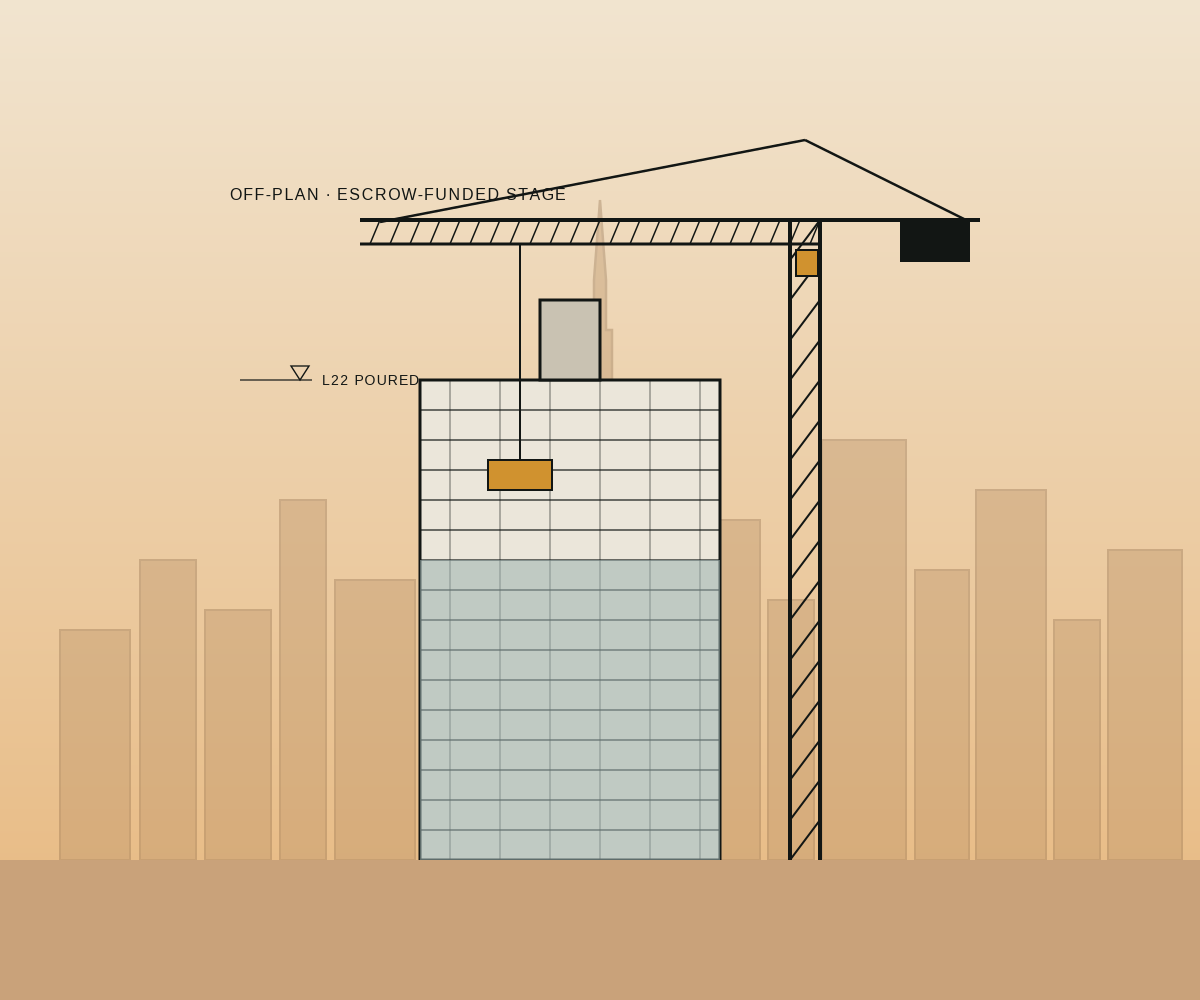
Off-plan property is a home sold by the developer before construction is finished — sometimes before it has started. You pay a deposit and then instalments, often tied to construction progress, and receive the finished unit and title deed at handover. In return for waiting and taking some risk, you usually pay less than for a similar ready home.
Read the full answer
Off-plan makes up a large share of new sales in Dubai, and it is what most adverts reaching India are selling: a small booking amount, a payment plan, and a handover date two to four years away.
How are off-plan buyers protected in Dubai?
Developers must register off-plan projects and pay buyers’ money into a project escrow account controlled under Dubai law, which can only release it to fund that project. Each off-plan sale is recorded on the interim register, Oqood, so your purchase is on record before the building exists. Licensed brokers may only market escrow-registered projects.
Read the full answer
These protections are why we always say: pay only into the project’s escrow account, never into a personal account or an unrelated company. The Dubai Land Department’s rules for brokers require them to confirm that an off-plan project is registered and has an escrow account before marketing it, and every property advert in Dubai must carry a permit number from the DLD’s Trakheesi system.
 Illustration
 Illustration
 Illustration
How do I check an off-plan project?
Ask for the project’s registration details and escrow account, and check them through the Dubai Land Department’s official channels. Ask for the advertising permit number shown on the listing, look at the developer’s record of finishing previous projects on time, and read the sale agreement’s clauses on delay, cancellation and refunds before paying anything.
Read the full answer
A short checklist:
- Project registration and escrow — confirmed through the DLD, not just a brochure.
- Advertising permit — every listing should show its Trakheesi permit number.
- The developer’s history — completed projects, and whether they were handed over on time.
- The broker’s licence — a broker registered with the DLD, with an office registration number.
- The contract — what happens if handover is late, what the payment schedule is tied to, and what you lose if you cancel.
How do payment plans work — and what does that mean from India?
Developers typically ask for a deposit, instalments during construction and a final payment at handover; some offer "post-handover" plans where you keep paying after receiving the keys. For resident Indians, paying in instalments over years, and especially after handover, raises foreign-exchange questions, so check with your bank before you sign.
Read the full answer
Under India’s Liberalised Remittance Scheme your remittances must stay within USD 250,000 a year and cannot be funded by Indian credit. A plan that stretches payments past completion can look like borrowing. Opinions differ on how this is treated, which is exactly why we tell clients to get their authorised dealer bank or a FEMA specialist to confirm the plan before paying the deposit. See buying Dubai property from India.
What are the risks of buying off-plan?
The main risks are a delayed handover, a finished unit that differs from the brochure, rising service charges, difficulty reselling before completion, and changes in the rupee–dirham rate while you are still paying. For Indian residents there is also the foreign-exchange risk of a payment plan that the remittance rules don’t comfortably allow.
Read the full answer
Ways to reduce them:
- Buy from developers with a record of finishing on time.
- Read the delay and cancellation clauses before you pay.
- Keep your payment schedule within what you can remit legally each year.
- Budget for service charges and the transfer fee, not just the instalments.
- Never pay outside escrow, whatever the discount offered.
What does freehold mean in Dubai?
Freehold means you own the property and the land share outright, with no end date, and can sell, rent out or pass it on. Foreign buyers, including Indians, can own freehold only in areas the Dubai government has designated for foreign ownership — which includes most of the districts where new projects are marketed.
Read the full answer
Outside the designated areas, foreigners can usually only hold long leases. Your broker should confirm the area’s status before you commit.
Questions people ask
Is it worth buying off-plan property in Dubai?
It can cost less than a ready home, but you carry the risk of delay and of paying before you can see what you are buying. Whether it suits you depends on your budget, timeline and how you will fund the payments from India. We don’t promise returns; we help you weigh the trade-offs.
Who holds my money when I buy off-plan?
Your payments should go into the project’s escrow account, which by law can only be used for that project. Never pay into a personal account or an unrelated company.
What is Oqood?
Oqood is the Dubai Land Department’s interim register for off-plan sales. It records your purchase before the building is finished; the full title deed is issued at completion.
Sources
- [1]Dubai Land Department — Real Estate Brokerage Practice Guide (2024) — checked 21 Oct 2026
- [2]Dubai Land Department — Real estate advertising permit (Trakheesi) — checked 21 Oct 2026
- [3]Al Tamimi & Co — What every purchaser must know about real estate agents in Dubai — checked 21 Oct 2026
- [4]RBI — Master Direction, Liberalised Remittance Scheme — checked 21 Oct 2026
Read next
- Illustration01Buying from IndiaStep by step: how an Indian resident or NRI can buy property in Dubai — the LRS limit, TCS, remittance, reporting, the Dubai purchase process and the costs.
- Illustration02Golden Visa propertyHow the UAE Golden Visa works through property: the AED 2 million rule, off-plan and mortgaged property, joint owners, and what it means for buyers from India.
- Illustration03Dubai Property DeskDubai property explained for families in Kashmir and across India: how Indians can buy, off-plan risks, the Golden Visa — 1-on-1 at Edition Mall or by video.
Talk to the Dubai Property Desk.
A 1-on-1 consultation at Edition Mall or on video: prices in rupees, the rules for Indian buyers, and the costs nobody puts in the advert.